What CoreGuard proposes to protect
The candidate invention is the coordinated CGEP/1 intent-to-execution evidence method, not blockchain technology, Stellar, Core DAO, a token or the CoreGuard brand. This is a proposed scope for patent-attorney review, not an issued claim or a conclusion of patentability.
- Bind an authorized intent to explicit constraints.
Describe the signer or agent, assets, amount, recipient, expiry and policy version. A precise encoding and signature-validation procedure must be supplied in the application; the current preparation outline is not a complete specification.
- Apply a fail-closed policy gate before signing or broadcast.
The described method evaluates constraints such as wallet bounds, real order-book depth and minimum destination amount. ALLOW permits the next step; DENY or an unknown result prevents execution or holds it for review. Counsel must assess the potentially distinctive combination, rather than assume that an ordinary policy check is patentable.
- Anchor a cryptographic commitment to the intent and policy result.
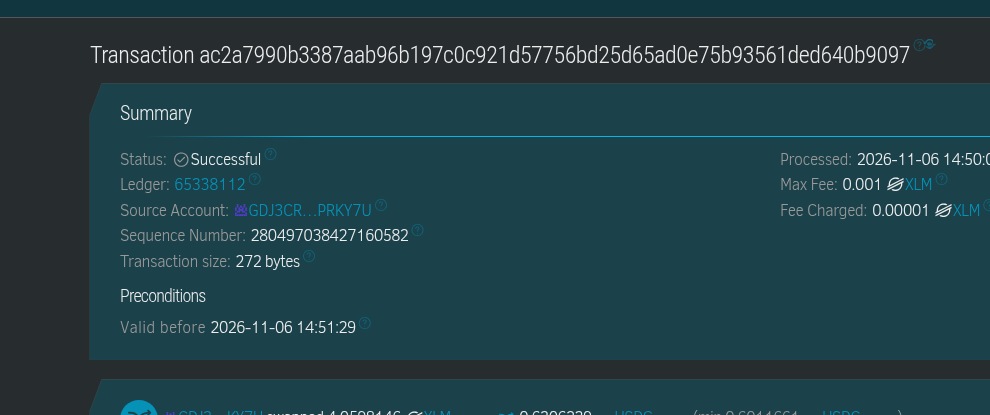
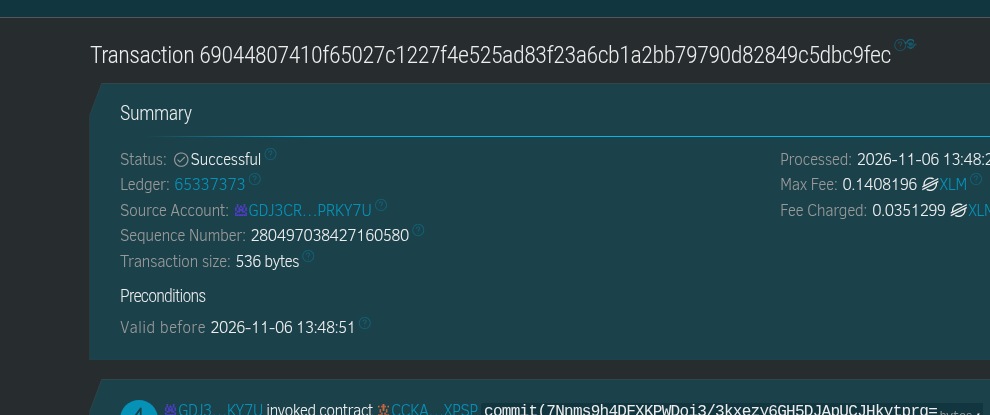
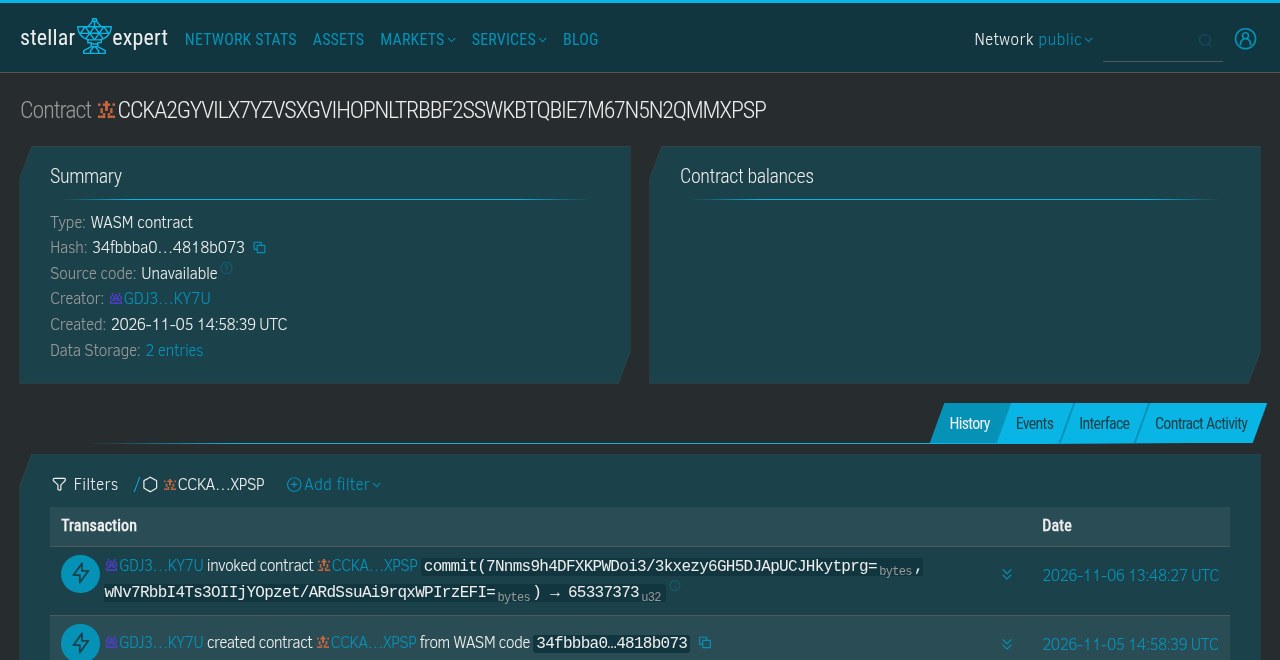
The proposed pipeline canonicalizes and hashes the evidence and records a proof identifier and commitment on a public ledger. Stellar's Soroban commit(proofId, commitment) is implementation context. Exact hash inputs, encoding, sequencing and failure handling still need a complete enabling description.
- Read execution back and compare it with the committed constraints.
The proposed receipt captures transaction identifiers, actual amounts and fees, then checks consistency against the intent and policy result. A public swap alone does not prove that all pre-execution checks occurred or that this comparison is implemented correctly.
- Provide independent evidence replay.
The candidate verifier reconstructs the evidence chain and reports PASS, FAIL or an incomplete result conservatively. Exact verifier rules, test vectors, mismatch cases and alternatives must be documented. Verification is not a guarantee of safety: VERIFIED ≠ SAFE.
What is not established
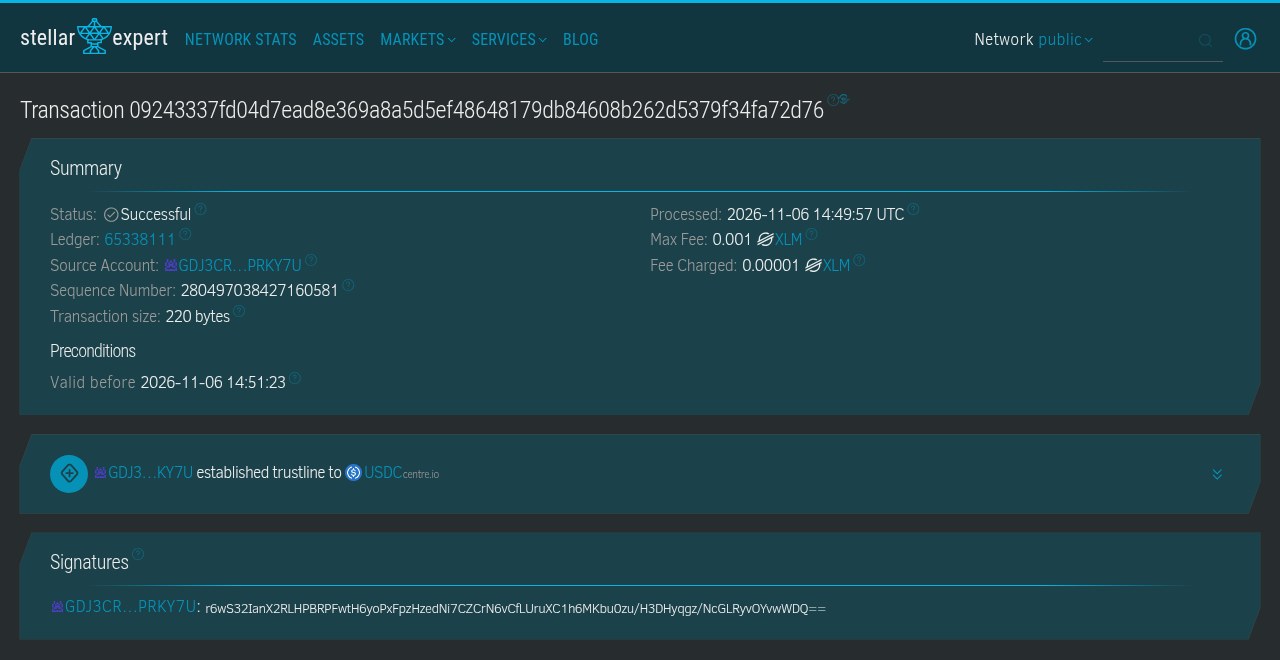
No novelty, non-obviousness, eligibility, inventorship, ownership or enforceable scope has been determined. Network records show transaction events, not a patent priority date. Core DAO-specific patent implementation evidence still needs review. Open-source publication may affect US and foreign rights; counsel must review the earliest disclosures, licenses and contributors.
Before an actual US filing: identify every inventor and any rights assignments, perform a prior-art review, complete the technical description and drawings, resolve disclosure deadlines and entity-fee eligibility, and authorize submission and payment through USPTO. A provisional is not examined and does not grant a patent; the appropriate follow-up normally must be arranged within 12 months to claim its benefit.
A US provisional application requires a detailed written description, any necessary drawings, inventor details, a cover sheet and the filing fee. The cover sheet alone is not an application. No patent has been filed or granted.
Existing public disclosures may affect US and foreign rights; obtain patent-attorney advice before filing. Patent costs are separate from the $150K SCF request. Fees checked 8 Nov 2026; confirm before payment.